Buy A Business

Buying a business can be one of the fastest ways to become a business owner.


This guide walks you through every stage of the acquisition process, with expert advice and links to in-depth resources covering each step.

ChatGPT Image Jul 10, 2026, 02_47_45 PM

How to Buy a Business in the UK: The Complete Step-by-Step Guide

Buying an established business can be one of the fastest and most effective ways to become a business owner. Rather than building a company from the ground up, acquiring an existing business gives you the opportunity to take over an operation with established customers, proven revenue, experienced employees and systems already in place.

However, buying a business in the UK is a significant investment, and success depends on understanding every stage of the acquisition process. From finding the right opportunity and valuing the business to carrying out due diligence, securing finance and completing the legal transaction, every decision has the potential to influence the long-term success of your investment.

This guide explains how to buy a business in the UK, breaking the process down into clear, manageable steps. Whether you're buying your first business, expanding an existing portfolio or exploring acquisition as an alternative to starting a business from scratch, you'll find practical advice and links to more detailed resources throughout.


How Do You Buy a Business in the UK?

Buying a business in the UK typically involves seven key steps:

  1. Decide what type of business you want to buy.
  2. Search for suitable businesses for sale.
  3. Assess the value and potential of each opportunity.
  4. Carry out thorough financial, legal and commercial due diligence.
  5. Arrange the appropriate acquisition finance.
  6. Negotiate the terms of the purchase.
  7. Complete the legal transaction and take ownership.

Although every acquisition is different, following a structured process can help minimise risk and improve your chances of purchasing the right business at the right price.


Why Buy a Business Instead of Starting One?

Starting a business from scratch can be rewarding, but it often requires considerable time, investment and patience before becoming profitable.

Buying an existing business offers a different route into entrepreneurship. Rather than creating everything yourself, you're acquiring an organisation with an established foundation that has already demonstrated commercial viability.

Potential advantages of buying a business include:

  • An existing customer base and recurring revenue
  • Established products or services with proven market demand
  • Experienced employees and operational systems
  • Supplier relationships and commercial contracts
  • Brand recognition and reputation
  • Historical financial performance to support decision-making
  • The opportunity to generate returns more quickly than many start-ups

Of course, purchasing an existing business doesn't eliminate risk. Every acquisition requires careful planning, professional advice and thorough due diligence. However, for many entrepreneurs and investors, buying a business can provide a faster and more predictable route to business ownership.

 

Buying an Existing Business

Starting a New Business

Existing revenue and customers

Revenue must be built from scratch

Proven business model

Business model still to be validated

Operational systems already in place

Processes created from the ground up

Historical financial information available

Limited or no trading history

Immediate trading after completion

May take months or years to become profitable

If you're still weighing up your options, our guide on buying a business vs starting a business explores the advantages, disadvantages and key considerations in greater detail.


Step 1: Decide What Type of Business You Want to Buy

One of the biggest mistakes first-time buyers make is searching for businesses before deciding exactly what they're looking for.

The UK's business acquisition market offers opportunities across almost every sector, from retail and hospitality to manufacturing, healthcare, technology and professional services. Without clear acquisition criteria, it's easy to spend time reviewing businesses that don't align with your objectives.

Before beginning your search, consider:

  • Your available budget
  • Industry knowledge and experience
  • Preferred location
  • Lifestyle and personal goals
  • Whether you want to work in the business or own it as an investment
  • Your appetite for growth opportunities
  • The size of business you're comfortable managing

You should also think about what success looks like after the acquisition. Are you looking for a business that generates stable income from day one, or are you seeking a company with significant growth potential that you can develop over time?

Defining these priorities early will make it much easier to identify suitable opportunities and avoid costly distractions.


What Our Experts Say

Start with your acquisition strategy, not the listings

Many buyers begin by browsing businesses for sale before they've established what they're actually looking for. While this approach may seem logical, it often leads to confusion and wasted time.

At Valius, we recommend defining your acquisition criteria first. Consider your budget, preferred industries, desired level of involvement and long-term objectives before reviewing listings. A clear strategy will help you assess opportunities more objectively and focus on businesses that genuinely match your goals, rather than being distracted by attractive-looking listings that may not be the right fit.


Step 2: Search for the Right Business

Once you've defined your acquisition criteria, the next step is finding businesses that genuinely align with your goals.

While there are thousands of businesses for sale across the UK at any given time, identifying the right opportunity requires far more than browsing listings. Buyers should consider not only the asking price, but also the business's financial performance, market position, growth potential and overall suitability.

A structured search process will help you compare opportunities consistently and avoid becoming distracted by businesses that appear attractive on the surface but don't meet your long-term objectives.

When reviewing businesses for sale, consider:

  • The industry and wider market outlook

  • Turnover and profitability

  • Recurring versus one-off revenue

  • Customer concentration

  • Employee structure and key personnel

  • Location and geographical reach

  • Lease or property arrangements

  • Supplier relationships

  • Growth opportunities

  • The seller's reason for exiting

It's equally important to understand why a business is being sold. Retirement, succession planning or a change in personal circumstances may present excellent acquisition opportunities, whereas declining performance or unresolved operational issues warrant closer investigation.

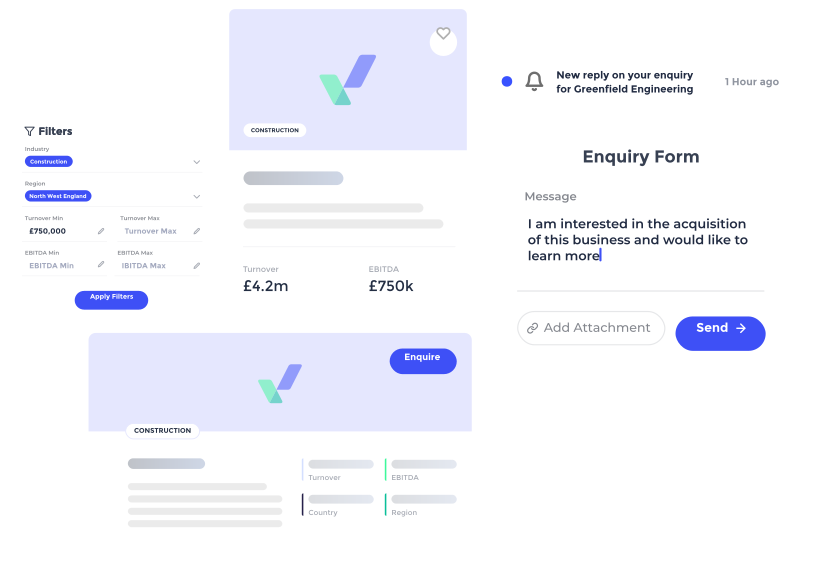
At Valius, our marketplace brings together businesses introduced through reputable advisers, giving buyers access to quality opportunities while helping reduce the time spent searching across multiple platforms.

If you're just beginning your search, our guide on where to find businesses for sale in the UK explains the different marketplaces, brokers and acquisition channels available.


What the Data Shows

Business acquisitions continue to play an important role in the UK economy

The UK has one of Europe's largest SME markets, with more than 5.5 million private sector businesses operating across the country, according to the Department for Business and Trade. Many of these businesses are owned by founders approaching retirement, creating a steady pipeline of acquisition opportunities for entrepreneurs and investors.

At the same time, research from the British Business Bank consistently highlights acquisition as a key growth strategy for ambitious businesses seeking to expand their market share, diversify their services or enter new geographic markets.
For buyers, this means there is no shortage of opportunities—but careful selection is essential.


Further reading


Step 3: Understand What the Business Is Really Worth

Determining whether a business represents good value requires much more than comparing the asking price with its annual profit.

Every business has an intrinsic value based on its financial performance, assets, future earning potential and the level of risk associated with ownership. A professional valuation helps buyers understand whether the purchase price reflects these factors and provides a stronger foundation for negotiations.


While valuation methodologies vary depending on the sector and size of the business, advisers will typically assess a combination of financial and qualitative factors.


These include:
  • Historic profitability
  • EBITDA or adjusted earnings
  • Cash flow
  • Revenue growth
  • Asset values
  • Existing liabilities
  • Intellectual property
  • Customer retention
  • Market position
  • Future growth potential


Different sectors command different valuation multiples. Businesses with predictable recurring income, strong customer retention and scalable operating models will often attract higher valuations than companies operating in more volatile or asset-intensive markets.

Understanding these differences helps buyers evaluate opportunities more objectively and avoid overpaying.


Key Valuation Factor

Why It Matters

Profitability

Indicates the business's ability to generate sustainable earnings.

Cash Flow

Demonstrates whether the business can support ongoing operations and future investment.

Customer Base

A diverse customer portfolio generally reduces commercial risk.

Assets

Tangible and intangible assets can significantly influence value.

Growth Potential

Expansion opportunities may justify a higher valuation.

Market Conditions

Industry trends and economic factors affect pricing expectations.


For a detailed explanation of valuation methods, read our guide on how to value a business before buying.


What Our Experts Say

A business is worth what it's worth to you—not simply what the seller is asking

Asking prices are often influenced by a seller's expectations, personal circumstances or future aspirations for the business. While they provide a useful starting point, they shouldn't be treated as an objective measure of value.

Professional buyers look beyond headline figures. They examine adjusted profits, recurring income, customer concentration, investment requirements and operational risks before deciding what the business is genuinely worth.

Ultimately, valuation isn't about finding the lowest possible price—it's about paying a fair price for a business with sustainable long-term potential.


Step 4: Carry Out Comprehensive Due Diligence

Once you've agreed a price in principle, the next stage is to verify that the business is exactly as represented.


This process—known as due diligence—is one of the most important stages of any acquisition. It enables buyers to investigate the financial, legal and operational health of the business before becoming legally committed to the purchase.

Effective due diligence doesn't simply identify problems. It gives buyers the confidence to proceed, renegotiate or, where necessary, withdraw before contracts are exchanged.

Depending on the complexity of the acquisition, due diligence may involve accountants, solicitors, tax advisers and sector specialists.

Areas commonly reviewed include:

Financial Due Diligence

The objective is to confirm that the financial information presented by the seller accurately reflects the business's performance.


This typically includes reviewing:
  • Statutory accounts
  • Management accounts
  • Cash flow forecasts
  • Tax records
  • Debtor and creditor balances
  • Payroll information
  • Revenue trends
  • Profit margins
  • Working capital requirements


Legal Due Diligence

Legal advisers will assess whether there are any contractual or regulatory issues that could affect the acquisition.


This may include reviewing:
  • Company ownership
  • Commercial contracts
  • Property leases
  • Employment agreements
  • Intellectual property rights
  • Ongoing disputes or litigation
  • Licences and regulatory approvals
  • Insurance arrangements


Commercial Due Diligence

Commercial due diligence focuses on the business's future prospects.

Questions to consider include:

  • Is the market growing?

  • How strong is the competitive position?

  • Does the business rely heavily on a small number of customers?

  • Are there opportunities for expansion?

  • How resilient is demand?

Understanding these factors helps buyers assess whether historic performance is likely to continue after completion.


Operational Due Diligence

Operational due diligence examines how the business functions on a day-to-day basis.

Areas of focus often include:

  • Internal systems and processes

  • Technology infrastructure

  • Supplier relationships

  • Stock management

  • Production capability

  • Key employees

  • Health and safety procedures

  • Cybersecurity

  • Business continuity planning


A business that depends heavily on the owner's personal relationships or specialist knowledge may require additional planning to ensure a successful transition.


Due Diligence Area

Purpose

Financial

Validate historical performance and identify financial risks.

Legal

Confirm ownership, contracts and regulatory compliance.

Commercial

Assess market position and future growth potential.

Operational

Understand how the business functions day to day.

Tax

Identify outstanding liabilities or future obligations.

Human Resources

Review employment arrangements and key personnel risks.


If you're preparing for this stage, our business due diligence checklist provides a comprehensive overview of the information buyers should request before completing an acquisition.


What Our Experts Say

Due diligence isn't about proving the seller wrong—it's about protecting your investment…

Even successful businesses will have areas of risk. The purpose of due diligence isn't to find a "perfect" company; it's to understand exactly what you're buying and whether the agreed price reflects that reality.

Experienced buyers approach due diligence with curiosity rather than scepticism. They ask questions, seek independent advice and use the findings to make informed commercial decisions—not emotional ones.

The cost of professional due diligence is often insignificant compared with the potential cost of overlooking hidden liabilities or operational challenges.


Your Next Step Towards Buying a Business

Buying a business can be one of the most rewarding ways to become an entrepreneur, expand your existing operations or diversify your investment portfolio. By acquiring an established company, you gain the opportunity to build on proven foundations rather than starting from scratch.

However, every successful acquisition begins with careful preparation. Taking the time to define your objectives, identify the right opportunity, understand its value and carry out thorough due diligence can significantly improve your chances of making a successful investment.

While no two acquisitions are identical, following a structured process will help you make informed decisions at every stage—from your initial search through to completion and beyond.
Whether you're exploring your first acquisition or you're an experienced buyer looking for your next opportunity, having access to quality businesses, trusted information and experienced advisers can make all the difference.

Find Your Next Business with Valius

At Valius, we're making business acquisitions simpler, smarter and more transparent.

Our platform has been built to connect serious buyers with quality businesses for sale across the UK, while providing the educational resources and trusted adviser network needed to navigate the acquisition process with confidence.

When you use Valius, you'll benefit from:

  • Carefully curated business opportunities from reputable advisers

  • A buyer-first platform designed specifically for business acquisitions

  • Expert guides and practical resources through our Knowledge Hub

  • A simpler way to search, compare and enquire about businesses for sale

  • Support to help you make informed decisions throughout your acquisition journey

Whether you're searching for your first business or your next investment opportunity, Valius is here to help you take the next step with confidence.
Browse businesses for sale today or explore our blog for more expert guidance on buying, valuing and growing a business.

  • Buying a business in the UK typically involves deciding what type of business you want to acquire, searching for suitable opportunities, valuing the business, carrying out due diligence, arranging finance, negotiating the terms of the purchase and completing the legal transaction. Working with experienced accountants and solicitors throughout the process can help reduce risk and ensure the acquisition progresses smoothly.
  • For many entrepreneurs, buying an established business can offer significant advantages over starting from scratch. Existing businesses often have customers, employees, suppliers, operational systems and a proven trading history, allowing new owners to focus on growth rather than building everything from the ground up. However, every acquisition should be assessed on its own merits.
  • The amount required depends on the size, sector and value of the business you're purchasing. In addition to the purchase price, buyers should budget for professional fees, due diligence, legal costs, working capital and any immediate investment required after completion. Some acquisitions may also be funded through bank lending, acquisition finance or seller finance.
  • Yes. Many business acquisitions use a combination of funding sources. Depending on the circumstances, buyers may secure bank finance, agree deferred payments, negotiate seller finance or structure part of the deal as an earn-out. The most appropriate funding solution will depend on the business and your individual circumstances.
  • Before proceeding with an acquisition, buyers should carefully assess the business's financial performance, customer base, market position, operational processes, legal obligations and future growth potential. Comprehensive due diligence is essential to identify risks and confirm that the agreed purchase price represents fair value.
  • The timeframe varies depending on the size and complexity of the transaction. Smaller acquisitions may complete within a few months, while larger or more complex deals involving extensive due diligence, financing or regulatory approvals can take considerably longer. Having experienced professional advisers and maintaining clear communication between all parties can help keep the process on track.
  • Valius is a buyer-focused marketplace designed to simplify the business acquisition process. Rather than searching across multiple platforms, buyers can discover curated business opportunities introduced through reputable advisers, alongside practical educational resources that help them make informed decisions throughout their acquisition journey.