How to Sell a Business in the UK: The Complete Guide

Selling a business can be one of the most significant financial decisions you make, so careful preparation is essential.


This guide explains how to sell a business in the UK, covering the key steps from exit planning and valuation through to finding buyers, due diligence, legal completion and handover.

Whats Changed@2x
Find it Fast

Open fast find

Close fast find


Need expert advice?
Speak to a trusted advisor about your acquisition plans.
Find an Advisor

How to Sell a Business in the UK: The Complete Guide

Selling a business can be one of the most important financial and personal decisions an owner makes.

For many entrepreneurs, the company represents years of work, a major part of their wealth and a responsibility to employees, customers and suppliers. A successful sale therefore involves far more than finding someone willing to make an offer.

You need to understand what your business is worth, prepare it for buyer scrutiny, find credible purchasers, negotiate the right commercial terms and complete a detailed legal and financial process.

For owners asking, “How do I sell my business?”, this guide explains how to sell a business in the UK from initial exit planning through to valuation, due diligence, legal completion and handover.


How do you sell a business in the UK?

To sell a business in the UK, start by defining your objectives and establishing a realistic valuation. Prepare your financial, legal and operational information before marketing the opportunity to relevant buyers. Once you have qualified buyer interest, compare offers carefully, agree Heads of Terms and complete due diligence. Your solicitor and tax advisers can then help negotiate the sale agreement, complete the transaction and manage the transfer of ownership.

The business sale process at a glance

Stage

What happens

What the seller should achieve

Exit planning

You define why, when and how you want to leave

Clear objectives and preferred exit route

Valuation

The company’s earnings, assets, risks and market position are assessed

A realistic value range

Sale preparation

Financial, legal and operational records are organised

A business ready for buyer scrutiny

Marketing

The opportunity is presented to relevant buyers

Credible and qualified enquiries

Negotiation

Offers are compared by value, structure and certainty

A preferred buyer and deal

Heads of Terms

The principal commercial terms are recorded

A framework for due diligence

Due diligence

The buyer investigates the company

Confirmation of the opportunity and risks

Legal completion

Contracts are finalised and ownership transfers

Payment and a completed sale

Handover

Knowledge and relationships are transferred

Continuity under the new owner

The precise process will vary according to the size, structure and condition of the company, but most UK business sales follow these stages.


1

Decide why you want to sell your business

Before thinking about valuation or approaching buyers, decide what you want the sale to achieve.

Business owners sell for many reasons, including:

  • Retirement
  • A change in health or family circumstances
  • Releasing capital
  • Pursuing another commercial opportunity
  • Reducing personal financial risk
  • A lack of suitable family succession
  • Reaching the limit of what they can achieve without further investment
  • Receiving an unsolicited approach
  • Financial pressure
  • Wanting new ownership to take the company forward

Your motivation will affect your preferred timescale, the buyers you approach and the terms you are prepared to accept.

An owner preparing for retirement may care deeply about employee security, continuity and the company’s legacy. Another seller may be focused on maximising the amount paid at completion. Someone under time pressure may place greater weight on speed and certainty.

Buyers will almost certainly ask why the company is for sale. A clear, credible explanation can reassure them. An unclear or inconsistent answer may make them suspect that undisclosed problems exist.

Before moving forward, consider:

  • When do I want the sale to complete?
  • How much money do I need to receive?
  • Must the full price be paid at completion?
  • Would I accept deferred consideration?
  • Am I prepared to remain involved after the sale?
  • Do I want to retain a minority shareholding?
  • How important are employee retention and brand continuity?
  • How confidential must the process remain?
  • What would cause me to reject an offer?


What Our Experts Say
Start before you need to sell.
Paul Griffiths

The strongest exit plans usually begin before the owner has made a final decision to leave.

Early preparation gives you time to strengthen management, improve financial reporting, renew key contracts and reduce reliance on the owner. These changes can make the company more valuable and easier to transfer.


2

Choose the right exit route

Selling to an external buyer is not the only way to leave a company.

Possible exit routes include:

  • A trade sale
  • A sale to a private buyer or entrepreneur
  • A management buyout
  • An employee ownership arrangement
  • A private equity investment or acquisition
  • A transfer to family members
  • A merger
  • An orderly closure or liquidation

Each route has different implications for price, timing, funding, employees and your future involvement.

Comparing common business exit routes

Exit route

Potential benefits

Points to consider

Trade sale

A strategic buyer may identify synergies and pay a premium

Sensitive information may be shared with a competitor

Private buyer

May value continuity, staff retention and the existing culture

Funding can be more complex

Management buyout

The management team already understands the company

External funding or seller support may be needed

Private equity

Can provide capital and expertise for further growth

The seller may need to retain shares or remain involved

Family succession

Can protect family ownership and legacy

Leadership suitability and funding must be addressed

Closure or liquidation

May offer a controlled exit where no sale is viable

Goodwill and future earning potential may be lost

The route with the highest theoretical valuation is not automatically the best option. Consider the probability of completion, payment structure, tax position and impact on the people connected to the business.

3

Decide whether to sell shares or assets

For a UK limited company, a transaction is usually structured as either:

  1. A sale of the shares in the company
  2. A sale of selected business assets

The structure can affect tax, liabilities, contracts, employees and the documentation needed.

Share sale

In a share sale, the buyer purchases ownership of the company itself.

The company generally continues to own its:

  • Assets
  • Contracts
  • Employees
  • Intellectual property
  • Property interests
  • Cash and debts
  • Trading history
  • Historic liabilities

Operational continuity may be easier because the same legal entity continues trading. However, the buyer is also acquiring the company’s history and may therefore carry out extensive due diligence.

Asset sale

In an asset sale, the buyer purchases specified parts of the business.

These may include:

  • Equipment
  • Stock
  • Customer contracts
  • Intellectual property
  • Trading names
  • Property
  • Goodwill
  • Particular business operations

The original company remains with the seller unless it is later closed.

An asset purchase allows the buyer to select what it acquires, but individual assets, contracts, licences and permissions may need to be transferred separately.

What happens to employees?

Employees may be protected under the Transfer of Undertakings (Protection of Employment) Regulations, commonly known as TUPE, when a business or part of a business changes owner. Whether the regulations apply depends on the type of transaction and the circumstances of the transfer. The government’s business transfer and TUPE guidance provides a useful overview, but sellers should obtain specific employment-law advice.


What Our Experts Say
Compare net proceeds, not just headline price. A £1 million share sale and a £1 million asset sale may leave the seller with very different net proceeds and continuing liabilities.
Paul Griffiths

Before agreeing a structure, ask your solicitor, accountant and tax adviser to model:

  • The amount you are likely to retain after tax
  • The liabilities remaining with you
  • The assets and contracts that must be transferred
  • The employee implications
  • Your exposure after completion
  • The practical complexity of each route

The transaction structure should be considered alongside the offer price, not after it has already been agreed.


4

Establish what your business is worth

One of the first questions sellers ask is: “How much can I sell my business for?”

There is rarely one indisputable figure.

A valuation is an informed assessment based on financial performance, assets, commercial strengths, risks and buyer demand. The final sale price will also be influenced by negotiations, funding and the proposed payment structure.

Common business valuation methods

EBITDA multiple

Many established SMEs are valued by applying a market multiple to maintainable earnings before interest, tax, depreciation and amortisation.

For example:

Maintainable EBITDA of £400,000 × a multiple of 4 = an indicative enterprise value of £1.6 million.

The appropriate multiple depends on factors such as sector, scale, recurring revenue, customer concentration, growth, management quality and risk.

Revenue multiple

Revenue multiples may be used where current profitability does not fully represent the company’s potential.

They are more common in some software, subscription and high-growth companies. Buyers will still examine margins, customer retention and the cost of achieving future growth.

Asset-based valuation

An asset-based valuation considers the value of the company’s assets after deducting liabilities.

This method may be particularly relevant for:

  • Property businesses
  • Manufacturing companies
  • Engineering businesses
  • Asset-intensive operations
  • Companies with limited goodwill

Discounted cash flow

A discounted cash-flow valuation estimates the present value of the cash the company may generate in future.

It can be useful where future performance is reasonably predictable, but the result is sensitive to assumptions about growth, risk and the discount rate.


What affects the value of a business?

Buyers are likely to examine:

  • Historic revenue and profit
  • Maintainable EBITDA
  • Quality and predictability of earnings
  • Recurring or contracted revenue
  • Customer retention
  • Customer and supplier concentration
  • Gross margins
  • Cash conversion
  • Growth opportunities
  • Owner dependency
  • Management strength
  • Employee retention
  • Intellectual property
  • Contract security
  • Market position
  • Capital expenditure requirements
  • Working-capital needs
  • Regulatory exposure
  • Quality of financial reporting

A company with predictable revenue, transferable customer relationships and a capable management team is generally more attractive than one generating the same profit but relying heavily on its owner or a single customer.

Valuation and sale price are not the same

A valuation provides a basis for planning and negotiation. It does not guarantee that a buyer will offer that amount.

A strategic buyer may offer more because it can create synergies. Another buyer may offer less because of funding restrictions or perceived risk.

Payment structure is also important.

An offer of £2 million paid in full at completion may be more attractive than a £2.4 million offer where £800,000 depends on future performance.

Read more about how to value your business before selling and when to consider professional business valuation services.

5

Prepare the business for sale

Sale preparation is sometimes described as exit readiness or vendor readiness.

Its purpose is to make the company easier for buyers to understand, reduce avoidable risk and identify issues before due diligence begins.

Reduce reliance on the owner

A business that cannot operate without its owner presents a significant risk to a purchaser.

Ask yourself:

  • Do customers insist on dealing only with me?
  • Do I approve every important decision?
  • Are sales dependent on my personal network?
  • Are supplier relationships undocumented?
  • Does essential knowledge exist only in my head?
  • Would the company struggle if I were absent for three months?
  • Do employees understand their responsibilities?
  • Is there a credible management structure beneath me?

Possible improvements include:

  • Delegating operational responsibility
  • Strengthening the management team
  • Documenting processes
  • Introducing regular management reporting
  • Moving customer relationships to other employees
  • Establishing clear job responsibilities
  • Creating succession plans for key roles

Improve financial visibility

A buyer needs to understand how the company makes money and whether its earnings can be sustained.

Prepare:

  • Statutory accounts
  • Current management accounts
  • Monthly profit and loss reports
  • Balance sheets
  • Cash-flow information
  • Revenue by customer
  • Revenue by product or service
  • Gross-margin analysis
  • Aged debtor and creditor reports
  • Budgets and forecasts
  • Loan and finance details
  • Explanations of exceptional costs
  • Evidence supporting proposed EBITDA adjustments

Any claimed add-backs should be reasonable and supported by evidence. Buyers are unlikely to accept an adjustment simply because the owner believes a cost could disappear.

Review legal and operational information

Examine:

  • Customer contracts
  • Supplier agreements
  • Employment contracts
  • Property leases
  • Shareholder agreements
  • Intellectual-property ownership
  • Licences and permissions
  • Data-protection compliance
  • Insurance policies
  • Litigation and disputes
  • Tax filings
  • Health and safety
  • Pension obligations
  • Change-of-control clauses

A problem does not always prevent a sale. A problem discovered unexpectedly during due diligence is more likely to damage trust, delay completion or lead to a price reduction.

Keep running the business

A sale process can consume a significant amount of management time.

Continue protecting:

  • Sales activity
  • Customer service
  • Employee retention
  • Cash collection
  • Supplier relationships
  • Margins
  • The sales pipeline

If performance falls below the figures presented to the buyer, the buyer may reduce its offer or change the payment structure.

What The Data Says
A large market creates competition for attention

SMEs make up the overwhelming majority of the UK private-sector business population. This means buyers can potentially review a broad range of opportunities, particularly in fragmented sectors.

For a seller, clear financial information, a credible valuation and a well-prepared business can make the opportunity easier to assess and distinguish it from less organised companies.

6

Appoint the right professional advisers

Most sellers benefit from transaction-specific professional support.

Depending on the size and complexity of the sale, your advisers may include:

  • A corporate solicitor
  • An accountant
  • A tax adviser
  • A business broker
  • A corporate finance adviser
  • A valuation specialist
  • An employment solicitor
  • A financial planner
  • An insolvency practitioner where relevant

What does a business broker do?

A broker or sell-side adviser may help you:

  • Value the company
  • Prepare marketing documents
  • Identify potential buyers
  • Manage enquiries
  • Coordinate confidentiality agreements
  • Qualify interested parties
  • Negotiate offers
  • Manage the sale timetable

Possible fee structures include:

  • An upfront engagement fee
  • A monthly retainer
  • A completion or success fee
  • A combination of these charges

Before appointing a broker, ask:

  1. What experience do you have in my sector?
  2. Who will manage my sale day to day?
  3. How will you identify potential buyers?
  4. How will you qualify enquiries?
  5. What comparable transactions have you completed?
  6. Is the engagement exclusive?
  7. How long is the minimum contract?
  8. What happens if I find the buyer myself?
  9. When does the success fee become payable?
  10. What other expenses may be charged?

A broker can add genuine value where specialist buyer sourcing, negotiation or process management is needed. Other sellers may prefer to use a marketplace or direct approach while retaining their own legal and financial advisers.

7

Prepare the sales documents

Business sales are normally marketed in stages to protect confidentiality.

The teaser

A teaser is a brief, anonymised summary designed to generate initial interest.

It may include:

  • Sector
  • Broad location
  • Products or services
  • Revenue and profit range
  • Key commercial strengths
  • Growth opportunities
  • Reason for sale

Avoid including details that make the company immediately identifiable, particularly in a specialist market.

The non-disclosure agreement

Interested parties will normally sign a non-disclosure agreement before receiving detailed information.

An NDA may govern:

  • How information can be used
  • Who can access it
  • Whether advisers can receive it
  • Contact with employees, customers or suppliers
  • Returning or destroying documents
  • Public disclosure of the potential transaction

An NDA reduces risk but does not remove it completely. Sensitive information should still be released gradually and only to qualified buyers.

The Information Memorandum

The Information Memorandum, usually shortened to IM, gives a serious buyer a detailed overview of the company.

It may cover:

  • Company history
  • Products and services
  • Customers
  • Suppliers
  • Directors and management
  • Employees
  • Market position
  • Sales and marketing
  • Systems and operations
  • Financial performance
  • Adjusted earnings
  • Assets and liabilities
  • Property
  • Intellectual property
  • Growth opportunities
  • Reason for sale

The IM should present the opportunity positively while remaining accurate. Claims made in it are likely to be tested during due diligence.

8

Find suitable buyers

Finding a buyer is not simply a matter of publishing an advert.

The objective is to reach parties with a credible reason to acquire the company and the ability to complete the transaction.

Trade buyers

A competitor, supplier, customer or company in an adjacent sector may see strategic value in the acquisition.

Possible benefits include:

  • Geographic expansion
  • New customers
  • Cost savings
  • Cross-selling
  • Additional expertise
  • Intellectual property
  • New products or services
  • Increased market share

Private buyers

An entrepreneur may prefer to acquire an established company rather than build one from the ground up.

Private buyers may value:

  • Stable cash flow
  • An experienced team
  • Reliable customers
  • Clear operating processes
  • An owner willing to support a handover

Retirement-led sellers can be particularly attractive to private buyers where continuity, staff retention and legacy matter alongside price.

Management teams

An existing management team may understand the company better than an external buyer.

A management buyout may require:

  • Bank funding
  • Private equity
  • Seller financing
  • Deferred consideration
  • A combination of funding sources

Private equity and investors

Financial investors often look for:

  • Growth potential
  • Strong cash generation
  • Capable management
  • A defensible market position
  • A credible route to a future exit

Some investors will acquire the entire company. Others may ask the seller to retain shares or remain involved during the next stage of growth.


Where can you advertise a business for sale?

Common options include:

  • Business-for-sale marketplaces
  • Business brokers
  • Corporate finance advisers
  • Direct outreach to strategic buyers
  • Accountants and solicitors
  • Professional networks
  • Sector associations
  • Investor networks
  • Carefully managed LinkedIn outreach

Read our guide to advertising a business for sale for a comparison of free and paid routes.


Ready to begin exploring buyer interest?

Valius brings business buyers, sellers and advisers together through a modern UK business marketplace. Register to introduce your opportunity to a community built around making acquisitions simpler, more transparent and less fragmented.

Register with Valius

9

Qualify potential buyers

Not every enquiry represents a serious buyer.

Before sharing detailed information or investing significant time, establish:

  • Who the buyer is
  • Its acquisition experience
  • What it wants to acquire
  • Why your business fits its criteria
  • Who makes the final decision
  • How the purchase will be funded
  • Whether lender or investor approval is required
  • Its preferred timetable
  • Whether it is reviewing other businesses

Ask for evidence of funding

Appropriate evidence may include:

  • Proof of funds
  • A lender letter
  • Details of finance discussions
  • Investor confirmation
  • Company accounts
  • An outline of the proposed funding structure

Evidence of funding does not guarantee completion, but it can help distinguish credible purchasers from speculative enquiries.

Maintain competition where possible

Relying entirely on one buyer can weaken your position if it changes its terms after due diligence.

A structured process involving several qualified buyers can:

  • Test market value
  • Improve negotiating leverage
  • Reduce dependence on one party
  • Create an alternative if the preferred transaction fails

Do not invent competing interest or mislead buyers. A credible process is more valuable than artificial pressure.

10

Compare offers carefully

The highest headline price is not necessarily the best offer.

Evaluate:

  • Cash paid at completion
  • Deferred consideration
  • Earnout provisions
  • Working-capital adjustments
  • Cash and debt treatment
  • Seller financing
  • Buyer funding
  • Conditions attached to the offer
  • Due diligence requirements
  • Exclusivity
  • Your role after completion
  • Restrictive covenants
  • Warranties and indemnities
  • Tax implications
  • Probability of completion

Comparing two example offers

Term

Offer A

Offer B

Headline price

£2,000,000

£2,400,000

Paid at completion

£2,000,000

£1,400,000

Deferred payment

None

£400,000

Earnout

None

Up to £600,000

Funding confirmed

Yes

Partially

Seller involvement

Three-month handover

Two years

Payment certainty

Higher

Lower

Offer B has the higher potential value, but a substantial amount may not be received immediately or at all.

Deferred consideration

Deferred consideration is paid after completion on agreed future dates.

For example:

  • £1.2 million at completion
  • £400,000 after 12 months
  • £400,000 after 24 months

The seller is accepting an element of credit risk.

Consider:

  • Whether security is available
  • Whether interest applies
  • What happens if the buyer defaults
  • Whether repayment is subordinated to bank debt
  • Whether early repayment can be required

Earnouts

An earnout makes part of the price dependent on future performance.

Potential areas of disagreement include:

  • Revenue recognition
  • Cost allocation
  • Group charges
  • Investment decisions
  • Customer losses
  • Management control
  • Changes to the company
  • The seller’s influence after completion

The formula, reporting rights and buyer obligations should be precisely documented.


What Our Experts Say
Negotiate certainty as well as price
Paul Griffiths

A buyer with confirmed funding, a focused due diligence plan and substantial cash available at completion may represent a stronger offer than a buyer promising a higher amount that depends on uncertain finance and ambitious future targets.

Ask your advisers to model:

  • The amount guaranteed
  • The amount at risk
  • The timing of payments
  • The tax position
  • The cost of remaining involved
  • The likely outcome if performance is below target
11

Agree Heads of Terms

Once a preferred buyer has been selected, the parties normally record the principal commercial terms.

The document may be called:

  • Heads of Terms
  • Heads of Agreement
  • A Letter of Intent
  • An offer letter

It commonly covers:

  • Price
  • Payment structure
  • Share or asset sale
  • Cash and debt treatment
  • Working capital
  • Due diligence
  • Exclusivity
  • Confidentiality
  • Conditions
  • Seller involvement
  • Restrictive covenants
  • Target timetable
  • Responsibility for costs

Many commercial provisions are usually non-binding, while confidentiality and exclusivity provisions may be binding.

Your solicitor should review the document before you sign it.

It is generally easier to resolve important commercial disagreements before granting exclusivity than after the buyer has become the only active party.


12

Complete due diligence

Due diligence is the buyer’s detailed investigation of the company.

The buyer uses it to verify the information provided, identify liabilities and decide whether to continue on the proposed terms.

Financial due diligence

The buyer may examine:

  • Historic accounts
  • Management accounts
  • Quality of earnings
  • Revenue recognition
  • Customer profitability
  • Gross margins
  • Working capital
  • Cash conversion
  • Debt
  • Forecasts
  • Capital expenditure
  • EBITDA adjustments

Legal due diligence

The buyer’s solicitor may review:

  • Corporate records
  • Share ownership
  • Material contracts
  • Employees
  • Property
  • Intellectual property
  • Data protection
  • Litigation
  • Insurance
  • Regulation
  • Pensions
  • Finance agreements

Commercial due diligence

The buyer may assess:

  • Market size
  • Competitors
  • Customer relationships
  • Pricing
  • Sales pipeline
  • Customer retention
  • Growth assumptions
  • Supplier reliance
  • Technology
  • Reputation

Tax due diligence

The review may cover:

  • Corporation Tax
  • VAT
  • PAYE
  • National Insurance
  • Employment status
  • Historic relief claims
  • Capital allowances
  • Share schemes
  • Director and related-party transactions

Create an organised data room

A secure data room should contain:

  • Clearly labelled folders
  • Consistent file names
  • Controlled user access
  • Current document versions
  • A documented question-and-answer process
  • A record of information disclosed

Good preparation will not eliminate buyer questions, but it can make the review faster and reduce the risk of contradictory answers.

What The Data Says
Official ONS figures show that UK M&A activity can vary considerably between quarters. The provisional value of domestic UK acquisitions was £1.8 billion in the final quarter of 2025, while inward acquisitions reached £27.4 billion, partly because of several large transactions. The ONS data covers qualifying majority-control transactions worth at least £1 million rather than every SME sale, but it demonstrates how deal values can move sharply with market conditions. Sellers cannot control the wider market, but they can control the quality of their records, the resilience of the company and how quickly they respond during due diligence.
13

Negotiate the sale agreement

The principal legal document will usually be either:

  • A Share Purchase Agreement
  • An Asset Purchase Agreement

It defines what is being sold, how payment will work and the obligations of each party.

Warranties

Warranties are contractual statements about the business.

They may cover:

  • Accounts
  • Contracts
  • Tax
  • Employees
  • Property
  • Intellectual property
  • Litigation
  • Compliance
  • Assets
  • Data protection

If a warranty is inaccurate and the buyer suffers a loss, it may be able to bring a claim, subject to the limitations in the agreement.

Indemnities

An indemnity protects the buyer against a specified liability or known risk.

A buyer may request one where due diligence identifies:

  • A tax dispute
  • Pending litigation
  • An employee claim
  • An environmental issue
  • A regulatory concern

Disclosure letter

The disclosure letter qualifies the warranties by identifying relevant facts and exceptions.

Proper disclosure is an important protection for the seller and should be prepared with specialist legal support.

Limiting the seller’s exposure

Sellers commonly negotiate:

  • A maximum liability cap
  • Time limits for claims
  • Minimum claim thresholds
  • Claim notification rules
  • Exclusions for disclosed matters
  • Restrictions on double recovery
  • Protections against losses caused by buyer actions

The precise terms will depend on the transaction and the negotiating position of each party.

14

Plan for tax before completion

Tax planning should begin before the commercial terms are finalised.

The result may depend on:

  • Whether shares or assets are sold
  • Whether the seller is an individual or company
  • How the consideration is paid
  • Whether payment is deferred
  • Whether an earnout is included
  • Whether the seller retains shares
  • The treatment of property and goodwill
  • Whether reliefs are available

Business Asset Disposal Relief

Business Asset Disposal Relief, formerly Entrepreneurs’ Relief, can reduce Capital Gains Tax on qualifying sales of certain business assets or shares. Eligibility depends on specific conditions, so not every business owner will qualify.

For qualifying disposals made from 6 April 2026, the Business Asset Disposal Relief rate is 18%.

The tax outcome will depend on the ownership structure, the assets being sold, the period for which qualifying conditions have been met and the nature of the seller’s involvement.

This guide provides general information and is not tax, legal, financial or investment advice. Obtain advice from appropriately qualified UK professionals before agreeing a transaction structure.

15

Complete the sale

Completion is the point at which the transaction documents take effect, ownership transfers and payment is made.

Before completion, the parties may need to finalise:

  • Board approvals
  • Shareholder approvals
  • Lender consents
  • Contract consents
  • Property documents
  • Employee arrangements
  • Funds-flow statements
  • Debt repayment
  • Working-capital calculations
  • Stock counts
  • Director resignations and appointments
  • Share or asset transfer documents
  • Completion-account procedures

Do not assume the transaction is certain until the documents have been completed and the funds have been received in accordance with the agreement.

16

Manage the handover

Some sellers leave immediately after completion. Others remain for a transition period.

The handover may include:

  • Introducing customers
  • Introducing suppliers
  • Briefing management
  • Communicating with employees
  • Providing system training
  • Transferring operational knowledge
  • Handing over passwords and permissions
  • Supporting licence transfers
  • Helping preserve important commercial relationships

Agree in advance:

  • How long you will remain
  • What you will be expected to do
  • How much time will be required
  • Whether you will be employed or engaged as a consultant
  • How you will be paid
  • Who will make decisions
  • What happens if the relationship breaks down

Plan stakeholder communications

Decide:

  • Who needs to be informed
  • When the announcement will happen
  • Who will deliver it
  • What information can be shared
  • How questions will be answered

The buyer, seller and advisers should coordinate communications to reduce uncertainty for employees, customers and suppliers.


How long does it take to sell a business?

There is no standard timetable for selling a business.

The process may take longer where:

  • Financial records are incomplete
  • The company relies heavily on the owner
  • Buyer funding is uncertain
  • Property is involved
  • Regulatory approval is required
  • Several shareholders must agree
  • Legal issues emerge
  • Due diligence information is delayed
  • The transaction structure is complex

A well-prepared company with realistic expectations and a credible buyer can usually progress more efficiently.

Trying to force an unrealistically fast timetable may reduce the buyer pool or require compromises on price and terms.


How much does it cost to sell a business?

Possible costs include:

  • Valuation fees
  • Broker fees
  • Corporate finance fees
  • Legal fees
  • Accounting and tax advice
  • Data-room costs
  • Property reports
  • Environmental reports
  • Early repayment charges
  • Management time
  • Tax liabilities

Obtain written proposals and confirm:

  • What is included
  • Whether VAT is additional
  • Whether third-party costs are passed on
  • When fees become payable
  • Whether a success fee applies
  • Whether fees remain due if the sale does not complete

The adviser with the lowest fee does not necessarily provide the lowest-cost outcome. Weak preparation, unsuitable buyers or poor negotiation could cost considerably more than the fee saved.


Common mistakes when selling a business

Starting too late

Owners often wait until they need to leave before preparing the company.

Setting an unrealistic asking price

A valuation based on personal expectations rather than evidence can discourage serious buyers.

Sharing confidential information too freely

Qualify buyers and release sensitive information gradually.

Focusing only on the headline price

Payment timing, conditions, funding and completion certainty also matter.

Neglecting normal trading

The company must continue performing throughout the sale process.

Hiding problems

A disclosed issue can often be managed. An unexpected issue can undermine trust and derail the transaction.

Granting exclusivity too early

Confirm buyer credibility and the principal commercial terms before removing alternatives.

Leaving tax planning until the end

The agreed deal structure may limit the options available later.

Using advisers without transaction experience

Routine legal or accounting experience is not the same as completing business acquisitions.

Selling a small business in the UK

Small-business owners often face specific challenges.

The owner may:

  • Hold the most important customer relationships
  • Perform several operational roles
  • Have no separate management team
  • Maintain less detailed reporting
  • Use informal supplier arrangements
  • Be emotionally attached to the company
  • Find that professional fees represent a larger proportion of the sale value

Preparation should focus on:

  • Demonstrating maintainable earnings
  • Separating personal and business expenditure
  • Documenting processes
  • Transferring customer relationships
  • Formalising contracts
  • Resolving legal issues
  • Setting a realistic valuation
  • Targeting buyers suited to the size of the opportunity

Formal preparation is not only relevant to large companies. Smaller sales can fail for the same reasons as larger transactions: weak information, unrealistic expectations and unresolved risk.


Can you sell a struggling business?

A struggling business may still be saleable.

A buyer may be interested in its:

  • Assets
  • Customer contracts
  • Intellectual property
  • Employees
  • Stock
  • Property
  • Brand
  • Market position
  • Turnaround potential

However, the price, deal structure and buyer pool are likely to differ from those of a healthy company.

Directors of financially distressed companies may also have legal duties that affect the options available. Obtain advice from a qualified insolvency practitioner and solicitor promptly rather than waiting until the company has exhausted its cash.


Sell your business with greater confidence

Selling a business is not a single decision. It is a sequence of financial, commercial, legal, tax and personal decisions.

A strong sale process normally begins with:

  • Clear objectives
  • Early preparation
  • Reliable financial information
  • A realistic valuation
  • Carefully selected buyers
  • Well-defined commercial terms
  • Experienced professional advice
  • Organised due diligence
  • A practical handover plan

Valius was built to make buying and selling UK businesses simpler, more accessible, more transparent and less fragmented.

Whether you are beginning to plan your exit or are ready to introduce your business to potential buyers, Valius provides a modern place to start.

Register with Valius to join 1,000+ business buyers and sellers already doing business on Valius.
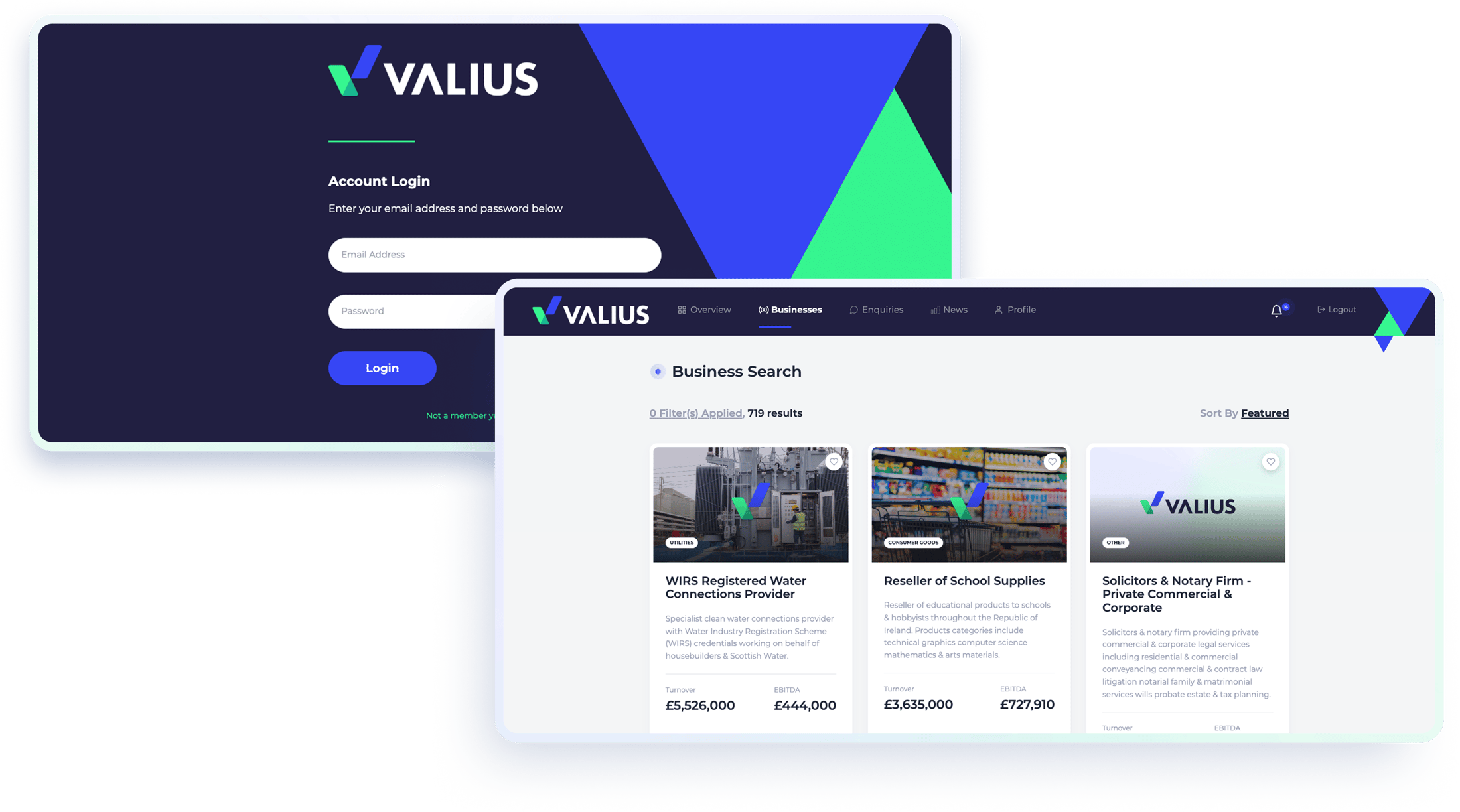
Ready to find your next business?
Browse 1,000+ verified listings on Valius and create your free account to get started.

Frequently Asked Questions

  • The best route depends on the company’s size, sector, value and complexity. Options include appointing a broker, using a business-for-sale marketplace, approaching trade buyers directly or engaging a corporate finance adviser. Compare the options based on buyer access, fees, confidentiality and the support you need.
  • A business may be valued using an EBITDA multiple, revenue multiple, asset-based method or discounted cash flow. The assessment should also consider recurring revenue, customer concentration, management strength, owner dependency, growth prospects and commercial risk.
  • Yes. A seller can use an online marketplace, professional network or direct buyer outreach. Legal, accounting and tax advice will normally still be required. A broker may be useful where buyer sourcing, qualification, negotiation and process management require specialist support.
  • There is no fixed timeframe. The process depends on preparation, buyer demand, funding, due diligence and legal complexity. Organised records, realistic expectations and prompt responses can reduce avoidable delays.
  • Typical documents include statutory accounts, management accounts, forecasts, contracts, employee records, tax information, property documents, corporate records, intellectual-property evidence and operating procedures.
  • The timing and legal requirements depend on the transaction, including whether TUPE applies. Obtain employment-law advice before making announcements or agreeing a communication timetable.
  • The tax position depends on whether shares or assets are sold, who owns them, how the price is structured and whether reliefs such as Business Asset Disposal Relief apply. Obtain personalised tax advice before agreeing the transaction structure.
  • Prepare accurate information before approaching buyers, resolve material issues, set a realistic valuation and respond promptly during due diligence. A faster sale may require compromises on price, payment structure or buyer choice.
  • You may leave at completion or remain for an agreed handover. You may also have continuing obligations relating to warranties, deferred consideration, earnouts, confidentiality and restrictive covenants.
  • Potentially. A buyer may value its assets, contracts, customers, intellectual property, employees or turnaround potential. The seller should be realistic about value and obtain legal and insolvency advice where the company is in financial distress.